
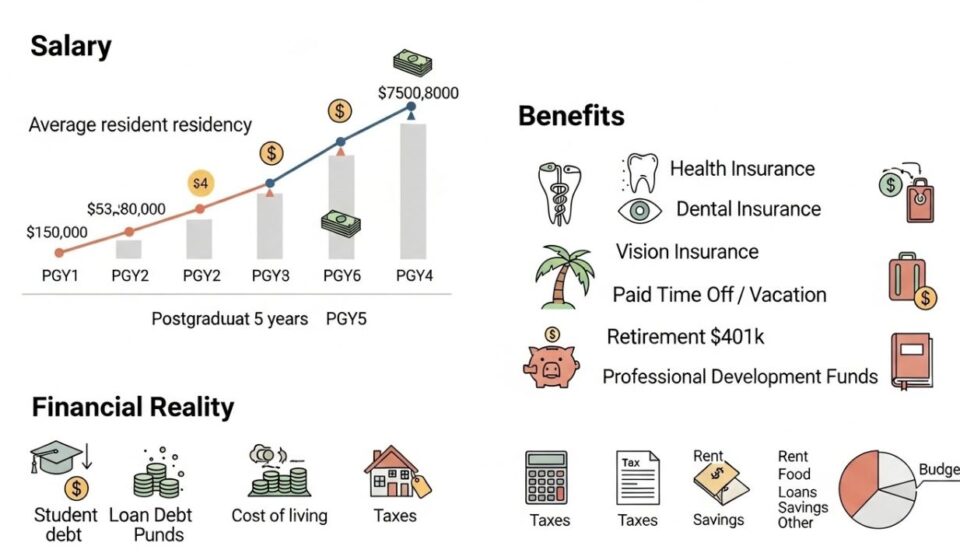
How Much Do You Make in Medical Residency is a common question among medical students and graduates preparing for their clinical careers. Medical residency is a critical training period where doctors work in hospitals under supervision to gain hands-on experience in their chosen specialty. While residents perform many of the same duties as fully licensed doctors, their earnings are significantly lower because residency is primarily a training phase rather than a full professional practice stage.
Understanding how much do you make in medical residency is important because it helps future doctors plan financially, manage expectations, and prepare for the demanding years ahead. Salary during residency varies depending on country, hospital, specialty, and year of training, but it generally includes a modest stipend along with benefits such as housing support, health insurance, and educational allowances.
What is Medical Residency?
Medical residency is a postgraduate training program where medical graduates work in hospitals to specialize in a specific field such as internal medicine, surgery, pediatrics, or psychiatry. Residents work under the supervision of experienced physicians and gradually take on more responsibility as they progress through their training years.
During this period, residents are exposed to real patient care, emergency situations, surgeries, and clinical decision-making. Although demanding, residency is essential for becoming a fully licensed and independent physician.
How Much Do You Make in Medical Residency on Average?
The salary of a medical resident varies widely across countries. In general, residency pay is modest compared to the workload and hours involved.
1. United States
In the U.S., residents typically earn between $55,000 to $75,000 per year, depending on the year of residency and location. First-year residents (interns) earn less, while senior residents earn more.
2. United Kingdom
In the UK, junior doctors in residency training earn approximately £32,000 to £50,000 per year, depending on experience and on-call shifts.
3. Canada
Canadian residents generally earn between CAD $60,000 to $90,000 annually, with increases over the training years.
4. Australia
In Australia, medical residents earn around AUD $70,000 to $100,000 per year, including allowances.
5. Other Countries
In many developing countries, residency salaries are significantly lower, sometimes ranging from modest stipends to moderate monthly incomes, depending on government funding and hospital systems.
How Much Do You Make in Medical Residency by Year of Training
Resident salaries usually increase each year as experience and responsibility grow.
1. First-Year Resident (Intern)
First-year residents earn the lowest salary. They work long hours learning basic clinical skills and hospital procedures.
2. Mid-Level Residents
Second and third-year residents receive moderate pay increases as they gain more independence and handle more complex cases.
3. Senior Residents
Final-year residents earn the highest salary during training, as they often supervise junior residents and handle advanced responsibilities.
Factors That Affect Residency Salary
Several factors influence how much do you make in medical residency:
1. Country and Healthcare System
Developed countries generally offer higher salaries compared to developing nations.
2. Specialty Choice
Some specialties, especially surgical fields, may offer slightly higher stipends or additional call-pay.
3. Hospital Type
University hospitals, private institutions, and government hospitals may have different pay structures.
4. Location
Residents in urban or high-cost areas may receive higher compensation or housing allowances.
5. On-Call Duties
Extra shifts and night duties often increase total monthly earnings.
Benefits of Medical Residency Beyond Salary
Although residency pay is not very high, residents receive several valuable benefits.
1. Medical Training
Residents gain advanced clinical experience that is essential for becoming independent doctors.
2. Health Insurance
Most residency programs include comprehensive health coverage.
3. Educational Support
Some hospitals provide funding for exams, courses, and conferences.
4. Housing and Meals
Certain institutions offer accommodation or meal allowances.
5. Career Advancement
Residency is a required step toward becoming a licensed specialist.
Challenges of Medical Residency Pay
Despite its importance, residency compensation has challenges.
1. Long Working Hours
Residents often work 60–80 hours per week, making the salary seem low compared to workload.
2. Student Debt
In countries like the U.S., many residents graduate with significant medical school debt.
3. Work Pressure
High stress and emotional demands can make financial compensation feel insufficient.
4. Limited Financial Growth During Training
Residents have little opportunity to significantly increase income during this period.
Is Residency Salary Enough to Live On?
In most developed countries, residency salaries are designed to cover basic living expenses such as rent, food, transportation, and utilities. However, luxury spending or significant savings may be difficult during this period.
Many residents manage their finances carefully, share housing, or take advantage of hospital-provided benefits to reduce costs.
How Residents Manage Finances
Residents often adopt practical strategies to manage limited income:
- Budgeting monthly expenses carefully
- Living in shared accommodation
- Using hospital-provided meals or discounts
- Avoiding unnecessary debt
- Planning long-term financial goals after residency
These strategies help maintain financial stability during training years.
Future Earnings After Residency
While residency pay is modest, it is only temporary. After completing residency, doctors’ salaries increase significantly.
Specialists and consultants can earn substantially higher incomes depending on country and specialty, often several times more than residency pay. This long-term earning potential makes residency an investment phase in a medical career.
Conclusion
How Much Do You Make in Medical Residency depends on country, specialty, and experience level, but it is generally a modest income compared to the workload and responsibility involved. Residency is primarily a training period focused on developing clinical skills rather than earning high income. Despite financial challenges, it provides essential experience, benefits, and career growth opportunities. For most doctors, residency is a temporary phase that leads to significantly higher earnings and professional independence in the future.