
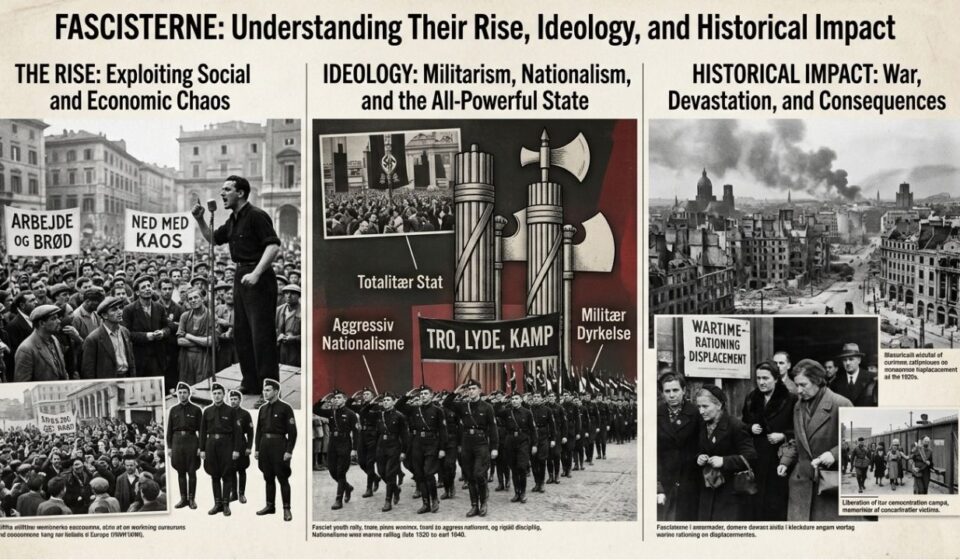
The term Fascisterne refers to followers and supporters of fascism, a political ideology that emerged in the early twentieth century and had a profound influence on world history. Fascism developed during a period of political instability, economic hardship, and social unrest, offering a vision of national unity, strong leadership, and centralized authority. While fascist movements gained significant support in some countries, they also became associated with authoritarian rule, political repression, and devastating conflicts. Understanding Fascisterne is essential for anyone interested in modern history, political systems, and the events that shaped the contemporary world.
The Origins of Fascisterne
The roots of Fascisterne can be traced back to the aftermath of World War I. Many European nations faced economic difficulties, political uncertainty, and widespread dissatisfaction among their populations. In this environment, new political movements emerged, promising stability and national renewal.
Fascism first gained prominence in Italy under the leadership of Benito Mussolini. The movement appealed to people who believed traditional political institutions had failed to address the challenges facing the nation. Supporters argued that a strong government could restore national pride and overcome economic and social problems.
As the movement expanded, Fascisterne promoted ideas centered on unity, discipline, and loyalty to the state. These principles attracted individuals seeking order during a time of rapid change and uncertainty.
The Core Ideology of Fascisterne
To understand Fascisterne, it is important to examine the key beliefs associated with fascism. Although different fascist movements varied in their policies and priorities, several common themes were present.
Nationalism
A strong sense of nationalism was one of the defining characteristics of Fascisterne. Supporters emphasized the importance of national identity and often argued that the interests of the nation should take priority over individual concerns.
Authoritarian Leadership
Fascist movements typically supported a powerful central leader. Fascisterne believed that decisive leadership could unite the population and achieve goals more effectively than democratic systems characterized by political debate and compromise.
Opposition to Political Pluralism
Another significant aspect of fascist ideology was opposition to political pluralism. Many Fascisterne viewed competing political parties as sources of division and instability. As a result, fascist governments often restricted or eliminated opposition groups.
Collective Unity
Fascisterne promoted the idea that citizens should work together toward common national objectives. Individual interests were frequently expected to be subordinate to the needs of the state.
The Rise of Fascisterne in Europe
The rise of Fascisterne was influenced by a combination of economic, social, and political factors. During the interwar period, many countries struggled with unemployment, inflation, and political unrest.
These conditions created opportunities for movements that promised strong leadership and national revival. Fascist organizations gained supporters by presenting themselves as alternatives to existing political systems. Their messages often resonated with citizens frustrated by economic hardships and governmental inefficiency.
In several countries, Fascisterne used rallies, speeches, newspapers, and other forms of communication to spread their ideas. Through these methods, they built mass movements capable of influencing national politics.
Fascisterne and Government Power
When Fascisterne gained political power, they often sought to reshape society according to their ideological vision. Governments influenced by fascist principles typically centralized authority and expanded state control.
Political Control
One of the most notable characteristics of fascist governments was the concentration of political power. Opposition parties and independent organizations frequently faced restrictions or bans.
Media Influence
Fascisterne understood the importance of communication in shaping public opinion. Governments often exercised significant control over media outlets to promote official messages and limit criticism.
State Organization
Fascist administrations emphasized discipline, organization, and national objectives. Public institutions were expected to align with government priorities and contribute to broader state goals.
The Role of Propaganda
Propaganda played a crucial role in the success of Fascisterne. Through speeches, posters, films, newspapers, and public events, fascist movements communicated their ideas to large audiences.
The purpose of propaganda was not only to gain support but also to create a shared sense of identity and purpose. Fascisterne often portrayed their movements as solutions to national problems while presenting opponents as threats to stability and progress.
By controlling information and shaping public narratives, fascist governments strengthened their influence over society.
The Impact of Fascisterne on World History
The actions and policies associated with Fascisterne had far-reaching consequences. Their influence extended beyond domestic politics and affected international relations, military conflicts, and social developments.
Political Transformation
In countries where fascist movements gained power, political systems underwent significant changes. Democratic institutions were often weakened or replaced by authoritarian structures.
Social Consequences
The policies implemented by fascist governments affected many aspects of daily life, including education, culture, and civic participation. Citizens were encouraged to support state objectives and conform to official expectations.
International Conflict
The expansionist ambitions of some fascist regimes contributed to tensions between nations. These developments played a major role in shaping the geopolitical landscape of the twentieth century.
Criticism of Fascisterne
Throughout history, Fascisterne have faced substantial criticism from scholars, political leaders, and human rights advocates. Critics argue that fascist systems concentrate excessive power in the hands of government authorities and limit individual freedoms.
Common criticisms include:
- Restrictions on political opposition.
- Limitations on freedom of expression.
- Centralization of authority.
- Suppression of dissenting views.
- Use of propaganda to influence public opinion.
These concerns have contributed to the negative reputation often associated with fascism in modern political discourse.
Lessons from the History of Fascisterne
Studying Fascisterne provides valuable insights into how political movements emerge and gain support during periods of uncertainty. Historians frequently emphasize the importance of understanding the social and economic conditions that contribute to the rise of authoritarian ideologies.
Several key lessons can be drawn from this history:
Importance of Democratic Institutions
Strong democratic institutions help provide mechanisms for representation, accountability, and peaceful political change.
Value of Civic Participation
Active citizen engagement plays a vital role in maintaining healthy political systems and encouraging informed decision-making.
Need for Historical Awareness
Learning about past political movements enables societies to recognize patterns and better understand the consequences of different forms of governance.
Conclusion
Fascisterne occupy an important place in the study of modern history and political ideology. Emerging during a period of instability and transformation, fascist movements attracted supporters through promises of national unity, strong leadership, and social order. Their rise influenced governments, societies, and international relations in ways that continue to be examined by historians and political scholars today.
By exploring the origins, beliefs, and historical impact of Fascisterne, readers can gain a deeper understanding of one of the most significant political phenomena of the twentieth century. Such knowledge remains valuable for understanding both historical events and contemporary discussions about governance, democracy, and political power.