
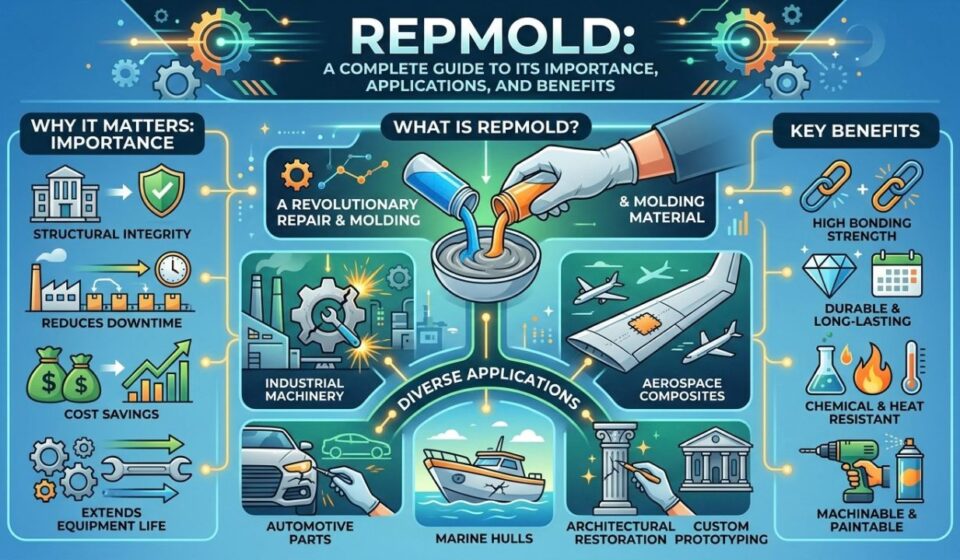
In today’s competitive industrial landscape, efficiency, precision, and innovation are essential for success. One term that has gained attention in manufacturing and production discussions is Repmold. Whether used in product development, industrial design, or manufacturing processes, Repmold represents an important concept that contributes to quality production and operational efficiency. As industries continue to evolve, understanding the role of Repmold can help businesses improve productivity, reduce costs, and maintain high standards of quality.
This article explores Repmold, its significance, applications, advantages, challenges, and future potential in modern industries.
What Is Repmold?
Repmold is commonly associated with manufacturing, molding processes, and production systems designed to create consistent and high-quality products. In many industries, molding techniques play a critical role in shaping raw materials into finished goods.
The concept of Repmold is often linked to precision, repeatability, and efficiency. Manufacturers rely on reliable molding solutions to ensure products meet exact specifications while minimizing waste and production errors.
As technology advances, Repmold continues to evolve through improved materials, automation, and innovative design approaches.
Why Repmold Matters in Manufacturing
The importance of Repmold lies in its ability to support efficient and scalable production. Modern businesses must meet increasing consumer demands while maintaining product quality and controlling costs.
Several factors highlight its importance:
Consistency in Production
One of the primary goals of any manufacturing process is consistency. Repmold helps ensure that products maintain uniform dimensions, appearance, and performance.
Improved Efficiency
Efficient production systems reduce manufacturing time and increase output. This enables companies to meet deadlines and customer expectations more effectively.
Cost Reduction
By minimizing material waste and reducing production errors, Repmold can contribute to lower operating expenses.
Quality Assurance
High-quality molds and production systems help maintain strict quality standards throughout the manufacturing process.
Applications of Repmold
The use of Repmold extends across multiple industries. Different sectors rely on molding and production technologies to create products that meet specific requirements.
Automotive Industry
Automotive manufacturers use molding processes to produce various components, including dashboards, interior panels, and plastic parts. Precision is essential to ensure safety and durability.
Consumer Electronics
The electronics industry depends on accurate molding techniques for device casings, connectors, and protective components. Repmold contributes to consistent product quality and appearance.
Medical Equipment
Medical manufacturers require high levels of accuracy when producing equipment and devices. Reliable molding processes help meet strict industry standards.
Packaging Industry
Packaging companies use molding solutions to create containers, caps, and protective packaging materials efficiently and consistently.
Construction Materials
The construction sector benefits from molded products used in infrastructure, building components, and specialized materials.
Key Benefits of Repmold
Businesses often invest in advanced manufacturing technologies because of the advantages they provide. Repmold offers several important benefits that support long-term growth and operational success.
Enhanced Product Quality
Quality remains a top priority in manufacturing. Reliable molding systems help reduce defects and improve product performance.
Faster Production Cycles
Efficient processes allow manufacturers to produce larger quantities within shorter timeframes.
Better Resource Management
Reducing waste helps businesses improve sustainability while lowering production costs.
Scalability
As demand grows, companies can increase production without significantly compromising quality or efficiency.
Competitive Advantage
Organizations that implement effective manufacturing solutions are often better positioned to compete in the marketplace.
The Role of Technology in Repmold
Technology has transformed nearly every aspect of manufacturing, and Repmold is no exception. Modern innovations continue to improve production capabilities and operational performance.
Automation
Automated systems help reduce human error while increasing production speed and consistency.
Computer-Aided Design (CAD)
CAD software allows engineers to create detailed mold designs before production begins, improving accuracy and reducing development time.
Smart Manufacturing
Connected systems and data-driven technologies provide real-time monitoring and process optimization.
Advanced Materials
New materials offer greater durability, flexibility, and performance for manufacturing applications.
Challenges Associated with Repmold
Despite its many benefits, implementing Repmold solutions can present certain challenges. Understanding these obstacles helps businesses prepare for successful adoption.
Initial Investment Costs
Advanced manufacturing equipment and technologies often require significant upfront investment.
Maintenance Requirements
Regular maintenance is essential to ensure equipment continues to operate efficiently and reliably.
Skilled Workforce Needs
Manufacturing systems often require trained professionals who understand production processes and quality standards.
Rapid Technological Changes
Companies must stay updated with evolving technologies to remain competitive in their industries.
Best Practices for Implementing Repmold
Organizations seeking to maximize the value of Repmold should follow established best practices.
Invest in Quality Equipment
Reliable machinery contributes to better production outcomes and long-term efficiency.
Prioritize Employee Training
A knowledgeable workforce can operate equipment effectively and identify potential issues before they become significant problems.
Monitor Performance Metrics
Tracking production data helps identify areas for improvement and supports informed decision-making.
Focus on Continuous Improvement
Regular evaluation and optimization ensure manufacturing systems remain efficient and competitive.
Future Trends in Repmold
The future of Repmold is closely tied to advancements in manufacturing technology. Several trends are expected to influence the industry in the coming years.
Artificial Intelligence Integration
AI-powered systems can analyze production data, predict maintenance needs, and optimize manufacturing processes.
Sustainable Manufacturing
Environmental concerns are encouraging companies to adopt greener production methods and reduce waste.
Increased Automation
Automation is likely to become even more sophisticated, enabling greater efficiency and consistency.
Digital Transformation
The integration of digital tools and smart technologies will continue to reshape industrial operations.
Customization Capabilities
Future manufacturing systems may offer greater flexibility, allowing businesses to produce customized products more efficiently.
How Repmold Supports Business Growth
For many organizations, Repmold is more than just a production solution. It serves as a strategic asset that supports growth, innovation, and customer satisfaction.
By improving efficiency, maintaining quality, and reducing operational costs, businesses can strengthen their market position and respond more effectively to changing customer demands. Companies that embrace advanced manufacturing techniques are often better equipped to navigate industry challenges and seize new opportunities.
Conclusion
Repmold plays an important role in modern manufacturing by supporting precision, consistency, and efficiency across a wide range of industries. From automotive production and consumer electronics to medical equipment and packaging, its applications continue to expand as technology evolves.
Organizations that invest in effective Repmold solutions can benefit from improved quality, reduced costs, and greater operational flexibility. As manufacturing continues to embrace automation, sustainability, and digital transformation, the importance of Repmold is expected to grow even further.
Understanding its benefits, challenges, and future potential allows businesses to make informed decisions and remain competitive in an increasingly dynamic industrial environment.