
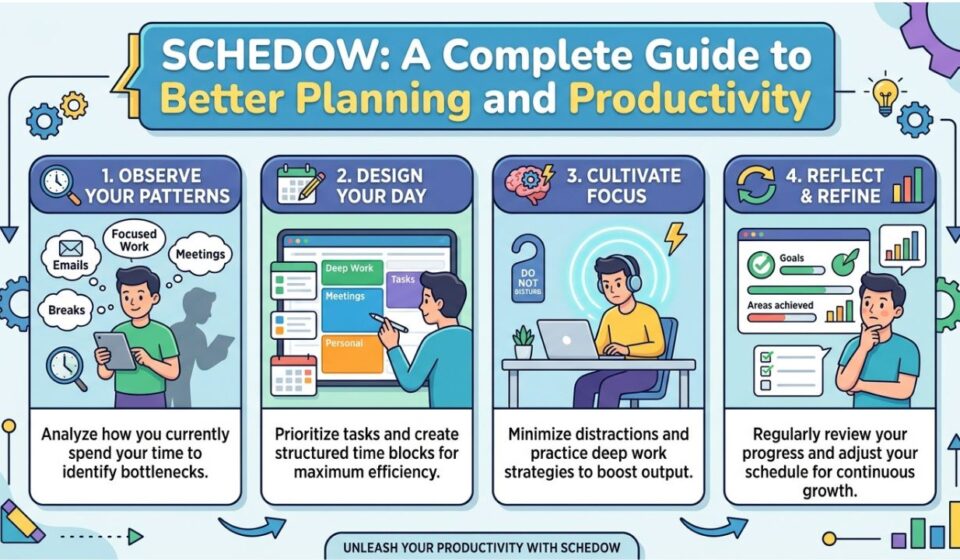
In today’s fast-paced world, staying organized is essential for both personal and professional success. This is where schedow plays a vital role. Whether managing daily tasks, coordinating projects, or planning long-term goals, a well-structured approach can improve efficiency and reduce stress. As modern lifestyles become increasingly demanding, understanding how schedow contributes to productivity can help individuals and businesses achieve better results while maintaining balance and focus.
What Is Schedow?
The term schedow refers to a structured method of organizing tasks, activities, appointments, and responsibilities within a specific timeframe. It serves as a framework that helps individuals and organizations allocate resources effectively while ensuring important objectives are completed on time.
A schedow can be simple, such as a daily to-do list, or highly complex, involving multiple teams, deadlines, and project milestones. Regardless of its form, the primary purpose remains the same: improving organization and maximizing productivity.
Why Schedow Matters in Modern Life
Effective planning has become increasingly important in today’s competitive environment. Without a clear structure, people often struggle with missed deadlines, forgotten responsibilities, and reduced productivity.
A well-designed schedow provides clarity and direction. It helps individuals understand what needs to be accomplished and when specific tasks should be completed. This organized approach reduces confusion and creates a sense of control over daily activities.
Improved Time Management
One of the greatest benefits of using a schedow is better time management. By allocating specific periods for tasks and activities, individuals can make more productive use of their available hours.
Rather than reacting to events as they occur, people can proactively plan their day and prioritize essential responsibilities.
Reduced Stress Levels
Uncertainty often contributes to stress and anxiety. When tasks accumulate without a clear plan, individuals may feel overwhelmed by their workload.
A structured schedow creates order and predictability, allowing people to focus on one task at a time while maintaining confidence that everything is accounted for.
Key Components of an Effective Schedow
Creating a useful planning system requires more than simply listing tasks. Several important elements contribute to the effectiveness of any scheduling strategy.
Clear Objectives
Every successful schedow begins with clearly defined goals. Understanding what needs to be achieved provides direction and helps prioritize activities accordingly.
Objectives should be realistic, measurable, and aligned with overall priorities.
Prioritized Tasks
Not all responsibilities carry the same level of importance. Effective scheduling involves identifying critical tasks and addressing them before less urgent activities.
Prioritization ensures that valuable time and resources are directed toward high-impact objectives.
Realistic Time Allocation
One common mistake is underestimating the time required to complete tasks. A practical schedow includes realistic estimates that account for potential challenges and interruptions.
This approach improves accuracy and reduces the likelihood of missed deadlines.
Benefits of Using Schedow in Business
Businesses of all sizes rely on planning systems to coordinate operations, manage resources, and achieve strategic goals.
Increased Productivity
A well-organized schedow helps employees understand their responsibilities and deadlines. This clarity minimizes confusion and enables teams to work more efficiently.
As a result, organizations often experience higher productivity and improved performance.
Better Resource Management
Companies must carefully allocate personnel, equipment, and financial resources. Scheduling tools help managers ensure resources are used effectively without unnecessary waste.
Proper planning also reduces bottlenecks that can delay project completion.
Enhanced Team Collaboration
When team members have access to a shared schedow, communication improves significantly. Everyone understands project timelines, responsibilities, and expectations.
This transparency promotes collaboration and reduces misunderstandings.
Personal Applications of Schedow
While businesses benefit greatly from structured planning, individuals can also experience significant advantages by adopting scheduling practices.
Daily Routine Management
Many people use a schedow to organize work responsibilities, personal commitments, exercise routines, and family activities.
Having a structured daily plan increases productivity while creating more opportunities for leisure and relaxation.
Academic Success
Students often juggle multiple assignments, exams, and extracurricular activities. A comprehensive scheduling system helps them stay organized and meet academic deadlines effectively.
Planning ahead also reduces last-minute stress and improves overall performance.
Goal Achievement
Long-term goals require consistent effort over time. A schedow breaks larger objectives into manageable tasks, making progress easier to track and maintain.
This structured approach increases motivation and accountability.
Digital Tools Supporting Schedow
Technology has transformed the way people organize their schedules. Modern digital tools offer advanced features that simplify planning and improve efficiency.
Calendar Applications
Digital calendars provide convenient methods for managing appointments, deadlines, and reminders. Users can access schedules from multiple devices and receive notifications for upcoming events.
These features help maintain consistency and reduce the risk of forgotten commitments.
Project Management Platforms
Many organizations use project management software to coordinate complex activities. These platforms allow teams to assign tasks, monitor progress, and manage deadlines within a centralized system.
Such tools enhance visibility and streamline collaboration.
Mobile Productivity Apps
Mobile applications make scheduling accessible anywhere. Users can update plans, track tasks, and adjust priorities while on the move.
This flexibility supports modern lifestyles and remote work environments.
Common Challenges in Schedow Management
Although planning systems offer numerous benefits, certain challenges can reduce their effectiveness if not addressed properly.
Overloading the Schedule
Attempting to accomplish too many tasks within a limited timeframe often leads to frustration and burnout.
A realistic schedow includes sufficient flexibility and avoids excessive commitments.
Lack of Consistency
Creating a schedule is only the first step. Success depends on following the plan consistently and making adjustments when necessary.
Regular review helps maintain alignment with changing priorities.
Ignoring Unexpected Events
Life is unpredictable, and unexpected situations frequently arise. Effective scheduling includes buffer time that allows for unforeseen circumstances without disrupting the entire plan.
Adaptability remains a critical component of successful organization.
Best Practices for Building an Effective Schedow
Developing strong scheduling habits requires commitment and continuous improvement.
Review Priorities Regularly
Priorities can change over time. Reviewing goals and responsibilities regularly ensures the schedow remains relevant and effective.
Break Large Tasks Into Smaller Steps
Complex projects often feel overwhelming. Dividing them into smaller, manageable actions makes progress easier and improves motivation.
Use Technology Wisely
Digital tools can enhance planning efforts, but they should support productivity rather than create distractions. Selecting appropriate tools based on individual needs is essential.
Maintain Flexibility
No schedule remains perfect forever. Being willing to adjust plans when circumstances change helps maintain productivity without unnecessary stress.
The Future of Schedow and Productivity
As technology continues to evolve, scheduling systems are becoming increasingly intelligent. Artificial intelligence, automation, and predictive analytics are transforming how individuals and organizations manage their time.
Future schedow solutions may automatically prioritize tasks, identify potential conflicts, and suggest optimal workflows based on user behavior. These advancements will further improve efficiency while reducing administrative effort.
Businesses and individuals who embrace these innovations will be better positioned to achieve their objectives in an increasingly competitive environment.
Conclusion
Schedow is more than a simple planning tool; it is a powerful framework for organizing tasks, managing time, and achieving goals. Whether used for personal development, academic success, or business operations, a structured scheduling approach improves productivity, reduces stress, and enhances overall efficiency.
By understanding its principles and applying best practices, individuals and organizations can create a more organized and productive future. As technology continues to advance, the role of schedow in daily life will become even more valuable, helping people navigate complex responsibilities with confidence and clarity.