
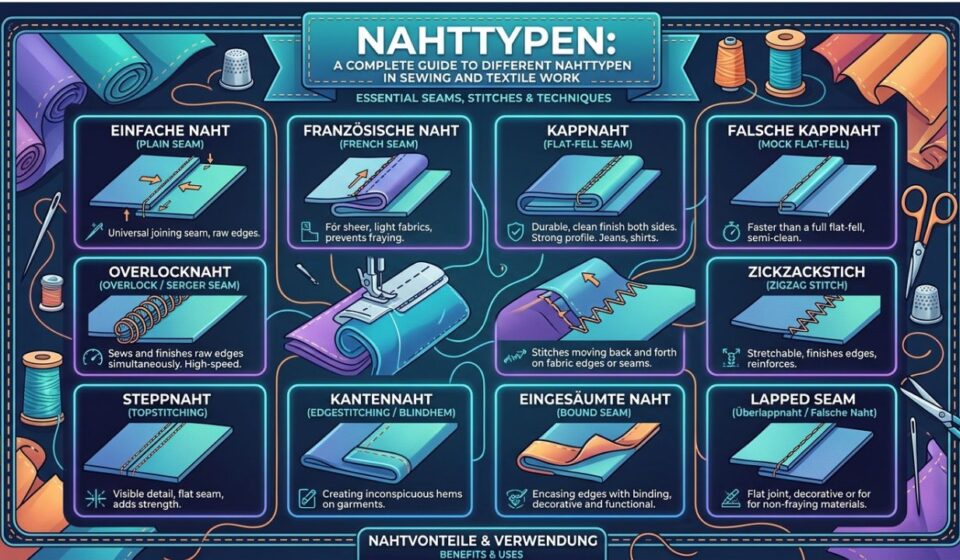
Nahttypen play a crucial role in the world of sewing, tailoring, and garment manufacturing. Whether you are a beginner learning how to stitch fabrics or a professional working in the fashion industry, understanding different seam types is essential for creating durable, comfortable, and visually appealing clothing. Nahttypen refer to the various methods used to join pieces of fabric together, and each type serves a specific purpose depending on the material, design, and strength requirements. From simple straight seams to advanced industrial techniques, Nahttypen influence both the functionality and aesthetics of finished garments. In this guide, we will explore the most common and important seam types used in sewing today and how they contribute to quality garment construction.
Nahttypen Overview: Understanding Seam Types
Nahttypen can be categorized based on their structure, strength, and application. The most basic seam is the plain seam, which is widely used in everyday clothing. Other seam types include flat-felled seams, French seams, and bound seams, each offering unique benefits. The selection of Nahttypen depends on fabric type, garment purpose, and durability requirements. For example, delicate fabrics like silk require enclosed seams to prevent fraying, while heavy fabrics like denim need reinforced stitching for strength. Understanding Nahttypen allows designers and tailors to create garments that are not only stylish but also long-lasting and comfortable to wear.
Nahttypen in Basic Sewing Techniques
In basic sewing, Nahttypen are introduced as foundational skills that every learner must master. The plain seam is usually the first technique taught, as it involves joining two pieces of fabric with a simple straight stitch. Once this is mastered, learners move on to more complex Nahttypen such as zigzag seams and edge-finishing seams. These basic seam types help prevent fabric fraying and improve the durability of handmade items. Beginners also learn how seam allowances work, which are essential for achieving accurate measurements and professional results. Mastering these basic Nahttypen builds confidence and prepares learners for more advanced sewing projects.
Common Nahttypen Used in Fashion Design
Fashion designers rely heavily on Nahttypen to bring their creative visions to life. One of the most popular seam types in fashion design is the French seam, which encloses raw edges for a clean and elegant finish. Another widely used type is the flat-felled seam, commonly found in jeans and sportswear due to its strength and durability. Designers also use decorative seams to add visual interest to garments. These Nahttypen are not only functional but also contribute to the overall style of clothing. By choosing the right seam type, designers can enhance both the appearance and performance of their creations.
Industrial Nahttypen in Manufacturing
In large-scale garment production, Nahttypen are selected for efficiency, speed, and durability. Industrial sewing machines are designed to produce consistent seam types quickly, making them ideal for mass production. Overlock seams are commonly used in factories because they prevent fabric edges from unraveling while allowing fast assembly. Lockstitch seams are another standard choice in industrial settings due to their strong and reliable structure. These Nahttypen ensure that garments meet quality standards while maintaining cost-effective production processes. Industrial seam selection is a balance between performance, durability, and manufacturing speed.
Nahttypen and Fabric Selection
Choosing the right Nahttypen depends heavily on the type of fabric being used. Lightweight fabrics such as chiffon or organza require delicate seam types that avoid bulk and maintain softness. On the other hand, heavy fabrics like canvas or denim require strong reinforced seams that can withstand tension and wear. Stretch fabrics such as jersey need elastic seam types that allow flexibility without breaking. Understanding the relationship between Nahttypen and fabric selection is essential for achieving professional-quality results in any sewing project. Proper matching ensures comfort, durability, and aesthetic appeal.
Advantages of Different Nahttypen
Each type of Nahttypen offers specific advantages depending on its application. Some seams provide extra strength, while others focus on decorative appeal or flexibility. For instance, flat-felled seams are extremely durable and ideal for workwear, while French seams offer a clean interior finish suitable for luxury garments. Overlock seams improve efficiency and prevent fraying in mass production. By understanding these advantages, designers and tailors can select the most appropriate seam type for each project. This knowledge also helps reduce material waste and improves overall garment quality.
Mistakes to Avoid When Working with Nahttypen
Working with Nahttypen requires precision and attention to detail. One common mistake is choosing the wrong seam type for the fabric, which can lead to weak or unattractive results. Another mistake is ignoring seam allowances, which can affect the fit of the garment. Beginners often rush the stitching process, resulting in uneven or loose seams. It is also important to use the correct needle and thread combination for each Nahtt ypen to ensure durability. Avoiding these mistakes helps improve the quality of sewing projects and ensures professional-looking results.
Conclusion: Mastering Nahttypen for Better Sewing Results
Nahtty pen are an essential part of sewing and garment construction, influencing both the strength and appearance of finished products. From basic stitching techniques to advanced industrial applications, understanding seam types allows designers and tailors to create high-quality garments. Whether you are working with delicate fabrics or heavy-duty materials, choosing the right Na httypen ensures durability, comfort, and style. By mastering these techniques, anyone can improve their sewing skills and produce professional-level results.